How to Build a Hair Routine for Thin Straight Hair: Daily Habits That Actually Make a Difference
A proper hair routine for thin straight hair routine can feel impossible to crack — wash it, and it goes flat. Skip a wash, and it looks greasy by afternoon. Sound familiar?
Fine, straight hair is one of the most common hair types, yet it’s also one of the most misunderstood when it comes to daily care. According to the American Academy of Dermatology, the average person loses 50–100 strands per day, and for those with fine hair, even normal shedding can make thinning look more noticeable. The wrong products or habits only make things worse.
The good news? With a few targeted adjustments to your daily routine, thin straight hair can look fuller, feel healthier, and stay cleaner for longer. This guide walks through every step — from how to wash and condition correctly to the styling tricks and scalp care habits that actually deliver results.
Quick Summary
This guide covers a complete daily hair routine built specifically for thin, straight hair. Topics include how often to shampoo, the right way to condition without losing volume, blow-drying techniques that add lift, lightweight styling product choices, scalp care, and internal nutrition tips. Volume-boosting strategies and oil control methods are also broken down with practical advice.
Key Takeaways
- Shampoo 2–3 times per week using a gentle clarifying formula — not a heavy moisturizing one
- Apply conditioner only from mid-lengths to ends to protect root volume
- Blow-dry upside down or with a round brush to lift flat roots
- Avoid heavy oils, silicones, and waxes — they weigh fine hair down fast
- Scalp massage and weekly exfoliation can improve density over time
- Diet, hydration, and sleep habits directly affect hair strength and appearance
- Dry shampoo works great for volume between washes — but clarify weekly to prevent buildup
Powerful Daily Hair Routine for Thin Straight Hair
Thin, straight hair has a few unique challenges: oil builds up faster, volume disappears quickly, and strands break more easily under stress. The right routine works with these characteristics rather than fighting against them.
Building a consistent approach — not just grabbing whatever shampoo is nearby — is what separates hair that looks healthy from hair that constantly looks limp and tired.
1. Start With a Gentle, Clarifying Shampoo (2–3 Times a Week)
One of the biggest mistakes people with fine hair make is either washing too often or not often enough. Washing every day strips the scalp of its natural protective oils, which triggers even more oil production to compensate — leaving hair greasier faster.
Washing 2–3 times per week with a gentle clarifying shampoo hits the right balance. Look for formulas with micellar water or salicylic acid, which clean thoroughly without being harsh. Heavy moisturizing shampoos — especially those marketed for dry or damaged hair — tend to coat fine strands and leave them looking limp within hours.
Pro Tip: Focus the shampoo on your scalp, not your ends. The ends don’t need the same level of cleansing and will dry out if over-shampooed.

by reddit user Mysterious-Pay6735
2. Use Conditioner Only on the Ends
Conditioner is essential — but the application method matters just as much as the product itself. Applying it from root to tip is one of the fastest ways to flatten fine hair and make it look weighed down.
Apply a lightweight, silicone-free conditioner from the mid-lengths to the ends only. This keeps the ends moisturized and manageable without collapsing root volume. If tangles are a recurring issue, a detangling spray is a smarter swap than loading on extra conditioner — it adds slip without the weight.
Pro Tip: Let the conditioner sit for 2–3 minutes before rinsing. Cold water rinse at the end helps seal the cuticle and adds shine.
3. Towel-Dry Gently and Use a Heat Protectant
Wet hair — especially fine hair — is significantly weaker than dry hair. Research published in the International Journal of Trichology confirms that wet hair stretches more easily and is more vulnerable to mechanical damage. Rubbing it aggressively with a rough cotton towel causes unnecessary breakage.
Instead, gently squeeze out excess moisture using a microfiber towel or a soft cotton T-shirt. Both reduce friction dramatically. Before reaching for any heat tool — including a blow dryer — apply a lightweight heat protectant spray. This step protects the strand’s protein structure and helps maintain volume through the styling process.

by reddit user Useful_Kiwi5768
4. Blow-Dry Upside Down or With a Round Brush
Air-drying sounds gentle, but for flat hair it usually means roots collapse flat against the scalp as the hair dries. Blow-drying with intention is actually better for thin straight hair when done correctly.
Flip your head upside down while blow-drying to encourage root lift immediately. Alternatively, use a round brush at the crown and mid-sections to roll hair away from the scalp as you dry. Use medium heat — not maximum — and direct airflow from roots toward ends to smooth the cuticle. Finish with 10–15 seconds of cool air to lock in the shape.
Pro Tip: Don’t fully dry the roots before moving to the next section. Slightly damp roots hold a lift better once they cool down.
5. Avoid Oily Styling Products and Use Volumizing Sprays
Heavy creams, serums, and waxes are largely designed for thick or coarse hair types. On fine, straight hair, they create the appearance of grease almost immediately — making hair look dirty even right after washing.
Stick to lightweight options: volumizing sprays, root-lifting mousse, or dry texturizing sprays. These add grip, body, and movement without residue. Less is always more with fine hair — start with a small amount and build up only if needed.
Recommended ingredients to look for: rice protein, panthenol, and hydrolyzed keratin — all of which support strength and volume without weight.
6. Brush With Care and Choose the Right Tool
Detangling wet hair with the wrong tool is a fast route to unnecessary breakage. A wide-tooth comb or a paddle brush with flexible bristles is far safer than a fine-tooth comb on damp, fragile strands.
Always start at the ends and work upward — not root to tip. This prevents forcing knots through the entire length of the hair. Boar bristle brushes are excellent for distributing natural scalp oils evenly, but using them too frequently can flatten hair at the roots. Reserve boar bristle use for evenings, after styling is done.
7. Limit Heat Styling and Embrace Your Natural Texture
Frequent flat-ironing or curling on already-fine hair causes cumulative protein damage over time — making strands weaker, thinner, and more prone to breakage. Studies show that repeated heat exposure above 300°F significantly degrades the hair’s keratin structure.
Try heatless alternatives like loose braids for soft waves or foam rollers for overnight curl. When heat tools are necessary, keep temperatures at or below 300°F and limit use to no more than twice per week. Always pair heat use with a protectant product.
8. Sleep on a Silk Pillowcase
Cotton pillowcases create friction throughout the night — something fine hair handles poorly. That friction causes breakage, frizz, and tangles by morning. Switching to a silk or satin pillowcase reduces that friction significantly.
Beyond reducing mechanical damage, silk helps hair retain moisture better overnight — meaning hair looks smoother and more manageable each morning with less effort.
9. Don’t Skip Scalp Care
The scalp is essentially the soil that hair grows from. A healthy, well-stimulated scalp produces stronger, denser hair over time. A 2016 study published in ePlasty found that standardized scalp massage performed daily for 24 weeks led to measurable improvements in hair thickness.
Use a gentle scalp scrub or a silicone scalp brush once a week to remove buildup and stimulate circulation. Lightweight serums containing caffeine, niacinamide, or peptides can further support follicle health between washes without adding greasiness.
10. Nourish Your Hair From the Inside Out
No topical routine can fully compensate for nutritional gaps. Hair is made primarily of keratin — a protein — so adequate protein intake is non-negotiable. Iron deficiency is one of the leading nutritional causes of hair thinning in women, according to the Journal of Korean Medical Science (2013).
Biotin, zinc, and vitamin D also play supporting roles in hair growth and strength. Staying well-hydrated matters too — dehydration affects the hair shaft’s flexibility and appearance. If shedding is significant or sudden, consulting a dermatologist or trichologist is the right move before adding supplements.
What’s the Best Volume Routine for Thin Straight Hair?
Volume is usually the top priority for anyone managing fine, straight strands. A few targeted product swaps and technique changes can make a visible difference.
Start with a volumizing shampoo that contains rice protein or strand-plumping polymers — these temporarily swell the hair shaft to add body. Root-lifting mousse applied to damp hair, followed by upside-down blow-drying, creates reliable lift. Finish with a dry texturizing spray to lock in movement without stiffness.
Dry shampoo on off-wash days doubles as a volume tool — spray onto roots, wait 30 seconds, and massage in for instant lift. For longer-term fullness, ask a stylist about adding light, face-framing layers, which reduce weight and create the illusion of thickness.
Can dry shampoo be used daily for volume? It can, but daily use without clarifying leads to follicle buildup. Use it on off-days and clarify at least once a week.
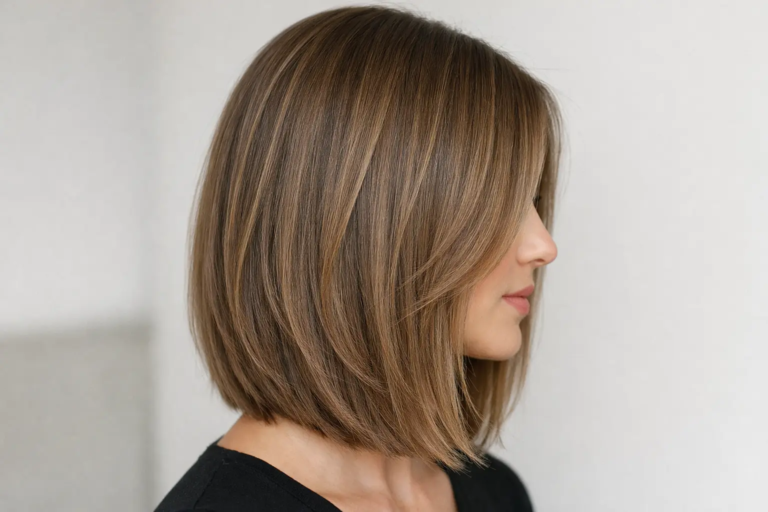
What’s the best haircut for thin straight hair? Blunt bobs, soft shags, and layered pixie cuts all work well. Ultra-long styles drag hair flat — the longer the hair, the more it pulls volume down.
How to Stop Thin Straight Hair From Getting Greasy So Fast
Greasiness happens faster on straight hair because there are no waves or curls to slow oil’s descent from scalp to ends. The result: hair that looks unwashed just hours after a shower.
Washing every 2–3 days with a clarifying shampoo — rather than daily — actually helps regulate oil production over time. Touching hair throughout the day transfers oil from hands to scalp, so keeping hands away makes a real difference. Dry shampoo on off-days absorbs excess sebum and restores root lift without water.
Avoid heavy silicone-based conditioners and apply only to the ends. Weekly scalp exfoliation helps prevent blocked follicles and keeps oil production more balanced.
Does rinsing with cold water help with oiliness? Yes. Cold water closes the hair cuticle, which slows the spread of scalp oil and gives hair a cleaner appearance for longer.
Does brushing make fine hair oilier? Over-brushing spreads scalp oils down the shaft quickly. Stick to once or twice daily — and always brush from ends upward.
Final Thoughts
Managing thin, straight hair in 2026 doesn’t require an overwhelming product collection or an hour-long morning routine. It requires the right approach: the correct shampoo frequency, lightweight products, smart styling techniques, and consistent scalp care.
Small, intentional changes — like switching to a silk pillowcase, applying conditioner only to the ends, or adding a weekly scalp massage — add up to a meaningful difference in how hair looks and feels over time. Fine hair isn’t a problem to solve; it just needs a routine that actually respects what it is.